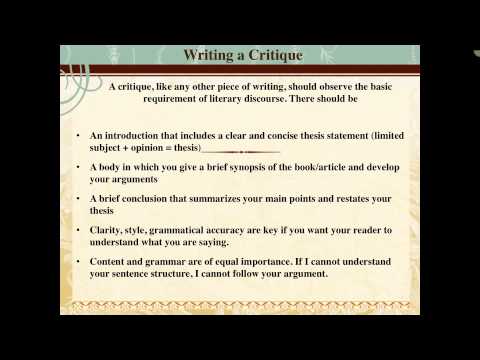
Most students know they need a thesis statement. Far fewer understand what makes one genuinely good. The result is a lot of papers built on vague, forgettable opening claims that do not give the reader — or the writer — much direction at all.
A thesis statement is not just a requirement to satisfy. It is the single most important sentence in your essay. Get it right, and the rest of your paper has a clear spine to follow. Get it wrong and even strong body paragraphs start to feel disconnected. This guide cuts straight to what works, what does not, and how to build a thesis statement that holds up from start to finish.
What a Thesis Statement Actually Does
Think of your thesis as a contract with your reader. It tells them what argument you are making, what ground your essay will cover, and why it matters. In exchange, your body paragraphs are obligated to deliver exactly what the thesis promises. Nothing more, nothing less.
That contract function is why vague thesis statements fail so reliably. A thesis like “Social media has changed society” promises almost nothing specific, so the reader has no way to follow your argument, and you have no anchor to write towards. The essay drifts.
A strong thesis, on the other hand, is specific enough to be challenged. If nobody could reasonably disagree with your thesis, it is probably a statement of fact rather than an argument. The goal is to stake a position that requires evidence to defend, and then defend it.
The Four Types of Thesis Statements
Not all essays ask for the same kind of thesis. Matching your thesis type to your assignment is the first step toward writing one that works.
| Essay Type | What the Thesis Does | Example |
| Argumentative | Takes a clear position and previews supporting reasons | “Universities should make mental health services mandatory because unaddressed anxiety directly impairs academic performance and long-term career outcomes.” |
| Analytical | Breaks down how or why something works the way it does | “Orwell’s use of doublespeak in 1984 illustrates how language can be systematically weaponized to erode independent thought.” |
| Informative / Expository | States what the essay will explain without arguing a position | “The rise of remote work has reshaped urban housing demand, daily commuting patterns, and corporate real estate strategy.” |
| Compare and Contrast | Identifies the key similarities or differences and their significance | “Although both stoicism and Buddhism promote emotional detachment, they differ fundamentally in their understanding of the self and the purpose of suffering.” |
Getting the type wrong is a surprisingly common mistake. An argumentative essay with an informative thesis will read as underpowered. An analytical essay with a compare-and-contrast thesis will feel unfocused. So before writing anything, confirm what your assignment is actually asking for.
How to Build Your Thesis in Four Steps
Step 1 — Turn the Assignment Into a Question
Almost every essay assignment, no matter how it is phrased, is asking you to answer a question. Your job in this step is to find that question and state it clearly.
If the assignment says “Discuss the causes of the 2008 financial crisis,” your question is: What caused the 2008 financial crisis? If the assignment says “Analyze the role of women in Shakespeare’s tragedies,” your question is: What role do women play in Shakespeare’s tragedies, and what does that reveal?
Writing the question out explicitly gives you a target. Your thesis is the direct, specific answer to that question.
Step 2 — Draft Your Position
Now answer your question in one sentence. Do not worry about polish at this stage — just get the claim down. This is your working thesis. It will change as you write, and that is completely normal.
A useful prompt to get started: “In this essay, I argue that…” Write that sentence and complete it honestly. Once you have the idea down, remove the phrase and integrate it into a natural sentence.
Step 3 — Add Your Supporting Reasons
A strong thesis does not just state a position; it signals why that position is true, at least in brief. Adding one or two supporting reasons gives your thesis depth and maps out your body paragraphs.
Compare these two versions:
- Without reasons: “Remote work has negatively affected collaboration.”
- With reasons: “Remote work has weakened team collaboration by reducing spontaneous communication, creating asynchronous delays, and removing the social trust that forms in shared physical spaces.”
The second version is more specific, more arguable, and automatically tells the reader what three areas the essay will cover. That precision pays off throughout the entire paper.
Step 4 — Test It Before You Commit
Before you finalize your thesis, run it through these three checks:
- The “So what?” test. If someone could read your thesis and shrug, it needs more significance. Why does your argument matter? Add a phrase that answers that.
- The “How and why?” test. Does your thesis explain how or why something is the case, or does it just state that it is? Strong theses answer how or why.
- The specificity test. Could this thesis apply to a completely different essay on the same topic? If yes, it is still too broad. Narrow it until it could only describe your paper.
Working Thesis vs. Final Thesis
One of the most freeing things to understand about thesis writing is that your first version is not supposed to be perfect. A working thesis is a starting point — a hypothesis you are going to test through the act of writing.
As you research and draft, your thinking will almost certainly sharpen. You might discover a nuance you had not considered, find evidence that complicates your original claim, or realize that your real argument is slightly different from the one you started with. All of this is normal and healthy.
So write your working thesis early, use it to guide your drafting, and then — once your essay is complete — come back and revise it into your final thesis. The final version should reflect the actual argument your essay makes, not the argument you intended to emake at the beginning.
6 Habits That Produce Weak Thesis Statements
Students tend to fall into the same patterns when thesis statements go wrong. Here is what to watch for:
- Stating a fact. “World War II ended in 1945” is not a thesis — it cannot be argued. A thesis must be debatable.
- Being too broad. If your thesis could introduce a book rather than a single essay, it needs to be narrowed. Scope your claim to what you can actually prove within your word count.
- Announcing instead of arguing. “This essay will examine…” is a meta-statement about your essay, not a thesis. Make the argument directly without announcing it.
- Using first-person opinion markers. Phrases like “I think” or “I believe” weaken a thesis by framing your argument as personal feeling rather than a reasoned position. Remove them and let the claim stand on its own.
- Packing in too many ideas. A thesis that tries to cover four unrelated points will produce an unfocused essay. Stick to one central argument with supporting reasons.
- Never revising it. Writing a thesis statement once and treating it as permanent is a mistake. Your final thesis should always reflect the essay you actually finished writing.
What a Strong Thesis Looks Like Across Disciplines
Thesis expectations vary slightly across subjects, so it helps to see what strong examples look like in different academic contexts.
In literature, a strong thesis makes an interpretive claim: “The deterioration of Gatsby’s language in the novel’s final chapters mirrors the collapse of the American Dream itself, revealing Fitzgerald’s argument that the ideal was always a form of self-deception.”
In social sciences, the thesis typically combines a phenomenon and its significance: “Increased smartphone use among adolescents correlates with measurable declines in sustained attention, with implications for how schools should structure learning environments.”
In history, the thesis takes a position on causation, significance, or interpretation: “The Marshall Plan succeeded not simply through economic aid but by deliberately tying reconstruction to political alignment with American foreign policy objectives.”
In each case, the thesis is arguable, specific, and directly connected to the evidence that follows. That consistency — specificity, arguability, and connection to evidence — is what strong thesis statements across all disciplines have in common.
When You Are Genuinely Stuck
Some assignments are simply harder to build a thesis for than others. If you have done the research, attempted the four-step process, and still cannot pin down a clear argument, it usually means one of two things: either your topic is still too broad, or you have not yet read enough to know what you actually think.
In both cases, the solution is the same — go back to the sources. Read more specifically, take notes on what surprises you or what you disagree with, and pay attention to where the debates in your field actually lie. A strong thesis almost always grows out of genuine engagement with existing ideas, not out of staring at a blank page.
If you are working on a longer thesis paper and need more than just a writing guide, buy thesis paper service from MasterPapers, which connects you with experienced academic writers who understand what strong thesis-level work looks like in practice.
FAQ
What is a thesis statement?
A one or two-sentence claim that states your essay’s central argument.
Where should a thesis statement appear in an essay?
A thesis statement should appear at the end of the introduction paragraph.
Can a thesis statement be a question?
No, it must be a direct, declarative statement that answers a question.
What is a working thesis?
A draft thesis is used to guide writing and is revised once the essay is complete.
How do you know if your thesis is too broad?
If it could apply to any paper on the topic, it needs to be narrowed.
Should a thesis statement include first-person language?
No, avoid phrases like “I think” or “I believe” for a stronger claim.